
Yes! But how much? Well, it depends, but let’s see what my science e-zine had to say this morning.
This article is for discussion purposes only and not medical advice. Consult the appropriate medical professionals for your personal situation.
Carbon Dioxide ‘Pulses’ Clear Toxins from Parkinson’s Brains in Recent Study
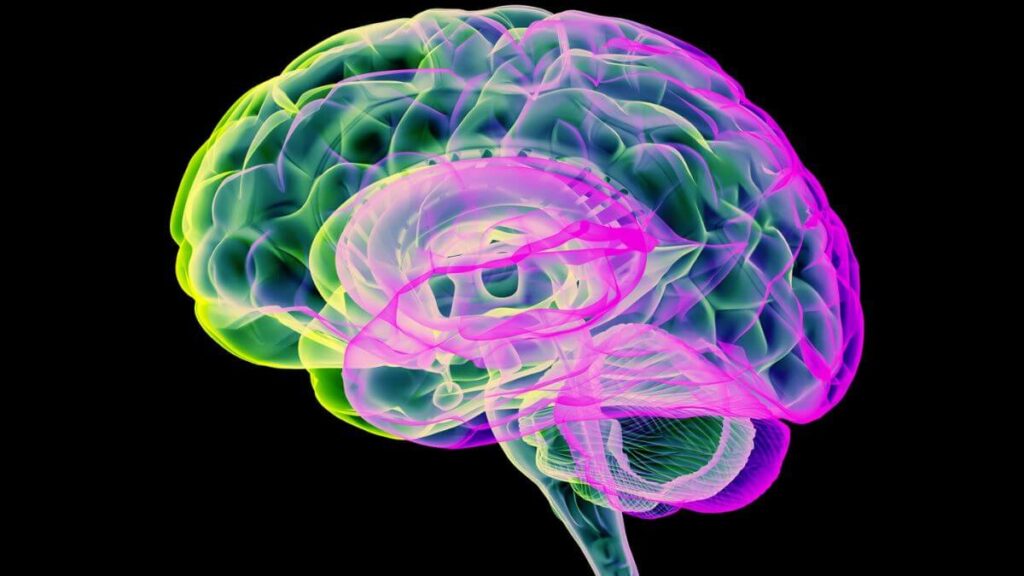
Now, that is a catchy title for an article which you can read here. I also “borrowed the fancy brain picture from them.”
Here’s the CliffsNotes version of it, and we’ll go from there. An important place to start is that they say it’s all preliminary. But as we’ll see after the notes in Chinese Medicine (CM), it all ties together.
It’s a small, early study suggesting that brief, rhythmic “CO₂ pulses” (done in a monitored research setting) can increase the brain’s fluid movement that helps wash out waste—a process usually strongest during deep sleep. It’s interesting, but not a treatment yet.
DO NOT ADMINISTER CO₂ TO YOURSELF. It has some very strange possible outcomes; messing with what you inhale should be left to the pros.
During deep sleep, CSF moves in slow waves that help carry away metabolic “waste” and proteins. This clearance pathway is often called the glymphatic system. “Glymphatic ‘rinse’ moves waste into cerebrospinal fluid, which can then drain out through meningeal lymphatic vessels to the neck’s lymph nodes.” Remarkably, to me, the lymph part was discovered or published in 2015, which I wrote about in 2015.
- What is the “brain clean-up system”? Your brain is bathed in a clear fluid (cerebrospinal fluid, CSF).
- Why Parkinson’s is part of this story? Partly because it really sucks to get it, and I bet these researchers had a family member with it.
In Parkinson’s, certain proteins (especially alpha-synuclein) can misfold and accumulate, and many people also have sleep disruption, which could reduce sleep-linked “clean-up” time.
- What the researchers actually did
They used a breathing setup that delivered short ON/OFF bursts of slightly higher CO₂ air (“intermittent hypercapnia”).
- Study 1: 63 older adults (30 with Parkinson’s) did an MRI while breathing ~35-second CO₂ cycles; researchers looked at changes related to CSF flow.
- Study 2: 10 people (5 with Parkinson’s) did three 10-minute sessions; blood was tested afterward for brain-linked proteins.
- What they found
CO₂ pulses were associated with changes in CSF flow consistent with “turning up” fluid movement.
After the longer sessions, several brain-associated proteins (including alpha-synuclein, plus others often tracked in neurodegeneration research) showed higher levels in the blood, which the authors interpret as consistent with increased clearance out of the brain.
The paper notes that some effects may be driven by a subset of participants and need more confirmation.
- What this does not mean
It does not show Parkinson’s symptoms improved, that disease progression slowed, or that the effects last.
It does not mean people should try to “hack” CO₂ at home (breath-holding, DIY devices, etc.). The study used controlled, monitored conditions.
- Why this matters to a wellness/acupuncture audience
The research team is exploring whether controlled breathing (and breath-centered practices such as yoga, tai chi, and qigong) might influence similar physiology—this is still early-stage and exploratory.
The “practical now” message is still the boring-but-true one: sleep quality matters, because deep sleep is when this system is most active.
I have written about sleep; you can read those articles here, here and here. Currently, they have linked 172 illnesses to sleep quality and duration.
Did you make it this far? Well, here comes the interesting stuff.
How does TCM and breathing fit in?
In TCM, there are several drivers of illness. Some, like a car accident, are obvious. Others, like trauma (all types) that were subtle or repetitive, are not as easy to link to an illness.
This article is really about how to breathe better—well, an LSD version. But I’ll tie up Parkinson’s and move on to that.
When I see a Parkinson’s patient in the clinic, my first question is, “Are you on medications yet?” If not, I send them here. It’s Dr. Janice Hadlock, she’s bright, that’s for sure. I have studied with her, and last I checked, she gives all the information to help Parkinson’s go away for free.
If the person has never taken the medication, she has cured people for the TCM condition that, in English, is known as Parkinson’s but I can tell you in my practice, the people that have it are hard to reach in time.
Like so many degenerative illnesses, it’s a case of bad luck after bad luck. We all inherit a set of genes, parents, location, exposure to environmental stuff, injuries, and…
If those add up to XYZ illness, you need to fix it. Many, if found in time, can be put into remission (that’s the PC way of saying cured).
In the case of Parkinson’s, it’s (90% of the time) a foot injury, Heart Qi deficiency, and Rebellious Stomach Qi. Which makes NO SENSE at all to most of you. It’s okay, it does to me.
In TCM terms, Heart Qi is most stressed by certain emotions that keep the mind (Shen) “revved up” or that repeatedly jolt the Heart system rather than letting it settle. Basically, intermittent fear, leading people to be unconsciously and often unnoticed afraid. Not globally afraid of everything but of some things.
That messes up Heart Qi, then a random foot injury messes up Stomach Qi, then they need a specific mental outlook, and presto that leads some, not all, to an imbalance often labeled in English – Parkinson’s. You are welcome to disagree, but I have seen it put into remission using this theory. If you have another way that works, please let me know.
Note – I never have and never will say I am a primary physician. What I do is an adjunct to regular/specialist Western Medical approaches. I stay in my lane. Keeping in mind, some human ailments are in my lane, NOT Parkinson’s. But Heart Qi deficiency, that I can treat.
It is a loose secret: patient asks me, “What am I treating?” I say, “You.” They say, “Yeah, but I have [add injury/illness here].” Yes, they do, but I am interested in them healing. That is done by figuring out what in their body is not working well and how to fix that, which will fix their injury/illness. So, it’s always: e.g., weak Qi, Blood, Shen, Po, Hun… All these terms that we are not used to. What can I say? “It’s in Chinese.”
Of interest is that all the Parkinson’s patients I have seen are afraid of treatments. I remember Janice in the courses saying it was super important to approach the patient very carefully and be hyper-aware of their fear triggering. It makes it very hard to get them into the clinic early enough and to stay and do what is required.
I have had poor success treating it. It is very frustrating.
Moving on:
So, how can we use this concept for self-improvement without turning to CO₂ gas bursts?
Breathing techniques have long been a staple in practices like Yoga, Tai Chi, and Qigong—where the focus is on slow, deliberate, and light breathing. These methods, grounded in ancient Chinese Medicine (TCM), help regulate energy flow (Qi) and promote balance within the body. If we look at how CO₂ affects brain waste clearance, it is interesting to think of how we may be able to simulate these benefits through controlled breathing.
One method to naturally raise blood CO₂ levels without extreme measures is to focus on slowing down your breath. Many people breathe too rapidly and shallowly, which can lower their body’s CO₂ levels and contribute to anxiety or imbalance.”
When people breathe in a relaxed, gentle rhythm, they can balance their energy, stimulate the nervous system in a healthy way, and potentially aid the brain’s natural waste-removal processes.
Try the “LSD” Breathing Method for Better Health
Not the psychedelic kind. Here, it stands for Light, Slow, and Deep breathing, and it’s an effective way to improve CO₂ levels in the body and enhance overall health. The principle is simple: breathe lightly (gently), slowly, and deeply.
For a deep, deep dive on breathing, this guy has the books, videos, and experience.
The goal is to breathe at a rate of about 6 breaths per minute, which can be achieved by extending the length of each breath. But most people I see breathe 12-20x/min, which is the medical normal.
This kind of breathing promotes relaxation, reduces heart rate, and encourages the parasympathetic nervous system to take over—helping to calm stress and stimulate healing. But it is not a breathing rate everyone needs to get down to. Even going from 20 to 10 breath/min at rest would help.
Moreover, slower breathing can increase your heart rate variability (HRV), a measure of the body’s ability to adapt to stress and recover. Research has shown that higher HRV is associated with better overall health, particularly in managing stress and inflammation—two important aspects of neurological health.
What Does This Mean for Parkinson’s?
While we can’t directly correlate this kind of breathing to Parkinson’s treatment, there is a promising connection to overall brain health. As blood CO₂ levels rise, we may enhance our natural brain-cleaning mechanisms by supporting fluid movement and waste removal. While this process is still being researched, the idea that simple breathing techniques can help regulate the body’s internal systems fits nicely with both modern science and traditional wisdom in TCM.
In the world of TCM, improving Lung Qi through light, controlled breathing also strengthens the body’s overall resilience. This could be an accessible approach for anyone wanting to enhance their brain health and potentially support a better quality of life.
Just be aware external supplies of CO2 can do very bad things to you. So just stick to breathing regular atmospheric air.
Conclusion: A Simple and Natural Way to Take Control
So, if you want to help your brain “clean up” naturally, start by paying attention to how you breathe. The LSD approach is a simple, natural tool to help you restore balance in your nervous system, improve CO₂ levels, and support overall health.
Of course, the other pillars of health need to be followed: proper food/water consumption, sleep, exercise, family, friends, and so on. But one thing for now. Most of which I have written about in other blog posts.
Remember, as with any new health approach, consistency is key, and it’s important to approach it with patience. But with regular practice, breathing in this natural, controlled way can provide real benefits for your mental and physical health.
Be Well,
Ward Willison R.Ac.
allbodycare.com
Kelowna Acupuncture & Other Natural Therapies